
Why Is My Eyelid Twitching? (And When Should You Worry?)
Eyelid twitching is one of the most common eye symptoms people experience. Almost everyone has felt it at some point: a small, annoying flutter in the eyelid that seems to come out of nowhere. It may last a few seconds, a few minutes, or sometimes return repeatedly over several days.
The good news is that in most cases, eyelid twitching is harmless and temporary. But understanding why it happens can help you calm the irritation — and prevent it from coming back.
What Is Eyelid Twitching?
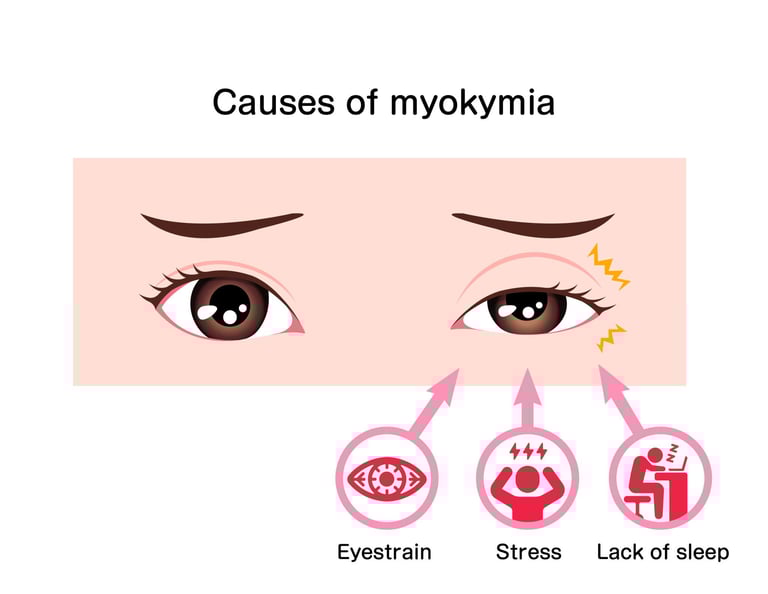
Eyelid twitching is a small, involuntary muscle contraction in the eyelid. Doctors call it eyelid myokymia. It usually affects the lower eyelid, although the upper eyelid can twitch as well.
Most people describe it as:
a fluttering sensation
a tiny pulse in the eyelid
a vibrating feeling that comes and goes
Interestingly, the twitch is often more noticeable to you than to other people. In many cases, it is not even visible to others.
The Most Common Causes
Several everyday factors can trigger eyelid twitching. The eyelid muscles are very sensitive to stress and fatigue.
Stress
Stress is one of the most common triggers. When your body is under pressure, small muscles — including those around the eyes — may become overactive.
Many people notice eyelid twitching during busy periods at work, exams, or emotionally stressful situations.
Lack of Sleep
Sleep deprivation makes the nervous system more excitable. When you are tired, the tiny muscles controlling the eyelids may start firing irregularly.
If your eyelid starts twitching after several nights of poor sleep, your body may simply be asking for rest.
Too Much Caffeine
Coffee, energy drinks, and certain teas stimulate the nervous system. High caffeine intake can make muscles more prone to small involuntary contractions.
Reducing caffeine for a few days often helps the twitch disappear.
Screen Fatigue
Long hours in front of computers or phones can strain the eyes and surrounding muscles.
When you stare at a screen:
you blink less
the eyes become dry
the eyelid muscles work harder
This combination can trigger eyelid twitching.
Dry Eyes
Dry eye is another frequent cause. When the eye surface is irritated, the eyelid muscles may react with small spasms.
Dry eye is particularly common in people who:
work with screens for many hours
wear contact lenses
spend time in air-conditioned environments
How Long Does Eyelid Twitching Last?
In most cases, eyelid twitching disappears on its own within a few hours to a few days.
Occasionally, it may come and go for a couple of weeks, especially if the underlying trigger (stress, lack of sleep, screen use) continues.
What You Can Do to Stop It
Simple lifestyle adjustments usually help the twitch settle down.
Try the following:
Get more sleep for a few nights
Reduce caffeine temporarily
Take breaks from screens
Use artificial tears if your eyes feel dry
Manage stress where possible
Many people notice improvement within a few days.
When Should You See a Doctor?
Although eyelid twitching is usually harmless, you should seek medical advice if:
the twitch lasts more than 2–3 weeks
the eyelid fully closes during spasms
other parts of the face also twitch
the eye becomes red, swollen, or painful
These situations are uncommon but may require further evaluation.
The Bottom Line
Eyelid twitching is a very common and usually harmless symptom. In most cases, it is simply the eye’s way of telling you that it needs rest.
Stress, fatigue, screen use, caffeine, and dry eyes are the most frequent triggers. With a little rest and a few small changes, the twitch typically disappears on its own.
If the symptom persists or spreads to other parts of the face, it is always wise to consult an eye doctor.
Bernani - Clear Eye Guidance
© 2026. All rights reserved.